
You May Not Have an AI Capability Gap.
It May Be a Vocabulary Translation Gap.
There is a strange thing happening to experienced leaders as AI becomes part of everyday business. We're being told, correctly, that we need to learn an entirely new technology. At the same time, we're being surrounded by an entirely new vocabulary to describe it.
Context engineering. Problem framing. Constraint specification. Evaluation criteria. Iterative refinement. Human-in-the-loop review.
If you've spent your career in marketing, strategy, operations or executive leadership, it's easy to hear enough of those terms and wonder whether you're further behind than you thought.
Then someone explains what they mean, and sometimes the response is simply:
Wait. That's what we're calling that now?
There's an important distinction getting lost in the conversation about AI adoption:
AI fluency and AI vocabulary are not necessarily the same thing.
Apparently, I've Been Calling It a “Word Bubble”
I work extensively with AI across much of the work I would normally do as a marketing executive: researching markets and competitors, comparing positioning and messaging, analyzing information, identifying patterns, exploring strategic options, preparing presentations, organizing research and developing content.
There's a particular format I frequently ask AI to use when I want to take that work and put it into something I can edit, save or use as a document. Except I didn't know what that format was called. So, I've been calling it a “Word bubble.” Recently, I learned that it's called a document-style Writing Block.
Apparently, “Give me the Word bubble” is not industry terminology.
Who knew?
What's even more interesting is that I haven't always called it the same thing. I've used “Word bubble” and several variations of it, and AI has consistently figured out what I meant because it had enough context to understand what I was trying to accomplish.
That's actually a pretty good example of AI fluency. Effective AI use isn't necessarily about finding the perfect words. It's about communicating enough meaning and context for the system to understand what you're trying to achieve.
New Technology Doesn't Always Mean New Thinking
I've spent roughly 30 years working in marketing while technology has changed continuously. In the late 1990s, I helped create an internal web page at Ericsson when companies were still figuring out how this new digital environment fit into the way we communicated and worked. Since then, I've worked through the expansion of the internet, digital marketing, websites, SaaS, marketing automation, social media, analytics, MarTech and now AI. Every shift required learning, and every shift brought new terminology.
Sometimes that terminology was necessary because something genuinely new had emerged. Software as a Service, for example, described an important change in how software was delivered and consumed. But not every new term represents an entirely new capability.
Recently, I was asked how I prompt AI to create an executive presentation. I stumbled for a moment, not because I don't know how to do it, but because I wasn't entirely sure what the question was asking me to call it.
I don't have a magic prompt. I approach the assignment much the same way I've approached complicated marketing and business problems for years.
- What are we trying to accomplish?
- Who is the audience?
- What do they need to understand?
- Why is this complicated?
- What information matters?
- What are the constraints?
- Where are the hot buttons and landmines?
- What does a successful outcome look like?
With AI, I also have to consider what I know that it doesn't.
If I don't provide relevant organizational history, customer knowledge, internal sensitivities or practical limitations, I can't reasonably expect AI to account for them.
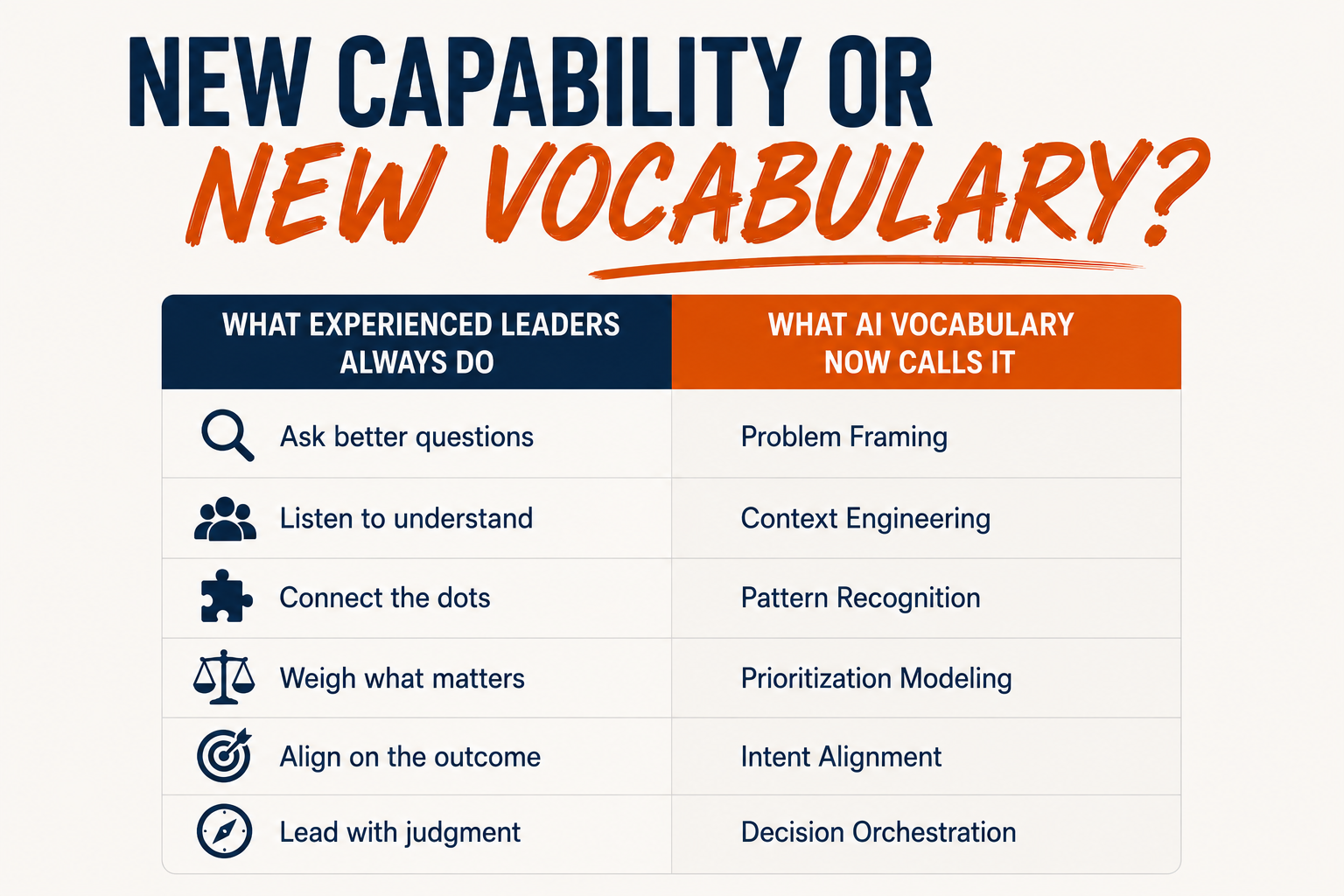
It turns out many of those things have names in the emerging AI vocabulary.:
- Understanding the assignment may be called problem framing.
- Providing the necessary background becomes context engineering.
- Explaining what can and cannot be done becomes constraint specification.
- Looking at what comes back, challenging it and refining it becomes human-in-the-loop review.
Those terms aren't wrong. Shared terminology can be useful. But hearing the terminology before understanding what it describes can make familiar thinking sound far more foreign than it actually is.
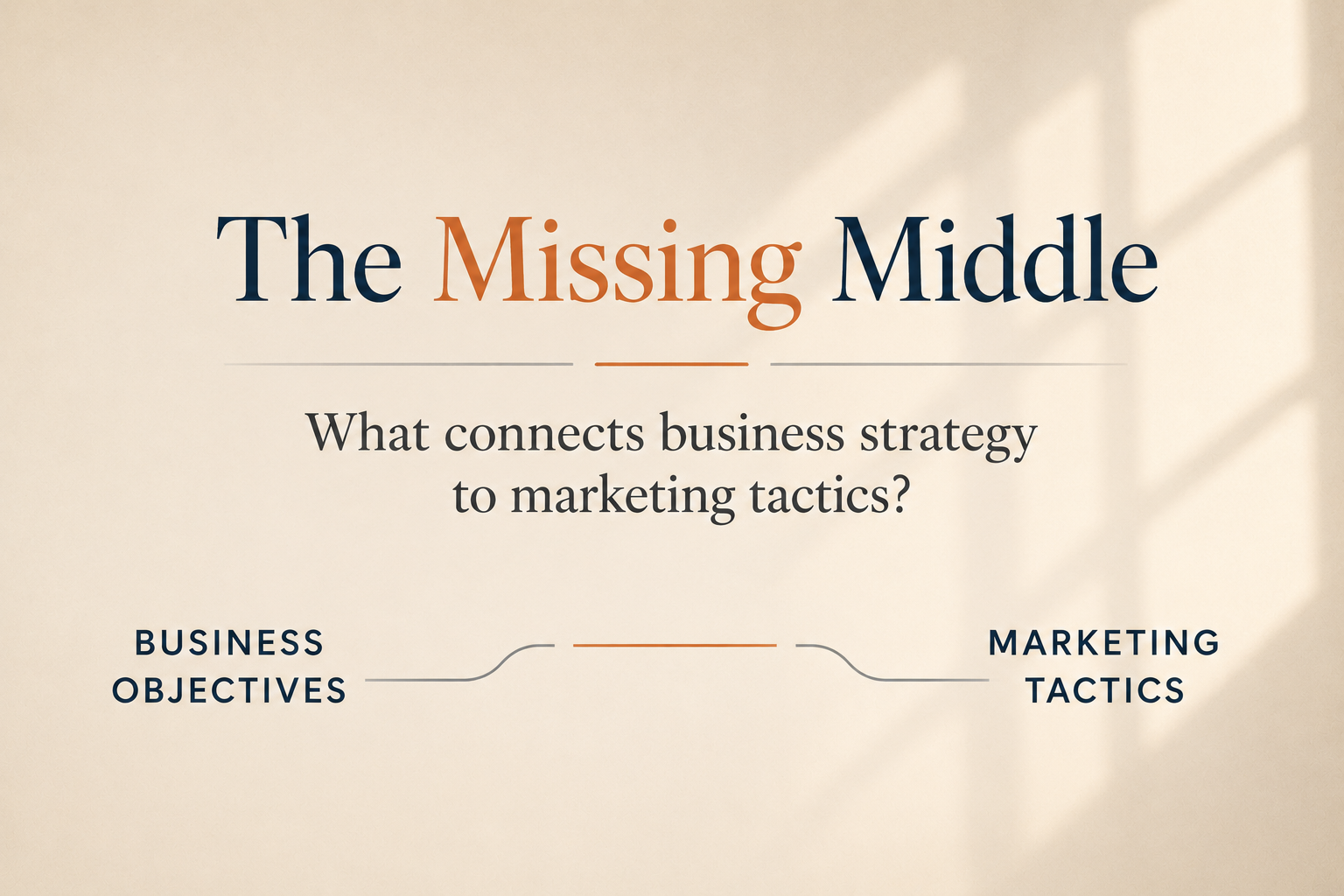
For example, I've spent my career asking about constraints – but I just may have called them hot buttons and landmines.
When a Vocabulary Gap Looks Like a Capability Gap
This matters because unfamiliar vocabulary can distort someone's assessment of their own capability. It can also distort how other people assess them.
An experienced executive may hear “context engineering” and think, I don't know how to do that. Someone else hears the hesitation and thinks, They don't understand AI. Both conclusions may be completely wrong. Ask instead: What does AI need to understand about this business situation before it can give you a useful answer?
That same executive may have thirty years of experience answering that question. Experienced leaders know that the same recommendation can be brilliant in one organization and disastrous in another. They know customer expectations, budget realities, organizational history, internal relationships and strategic priorities can completely change the right answer.
That experience doesn't automatically make someone proficient with AI. There are genuinely new tools, capabilities and risks to learn. BUT… there's a significant difference between “I don't know how to do that” and “I didn't know that's what you called what I'm already doing.” We shouldn't confuse the two.
AI Gives Experience a New Place to Work
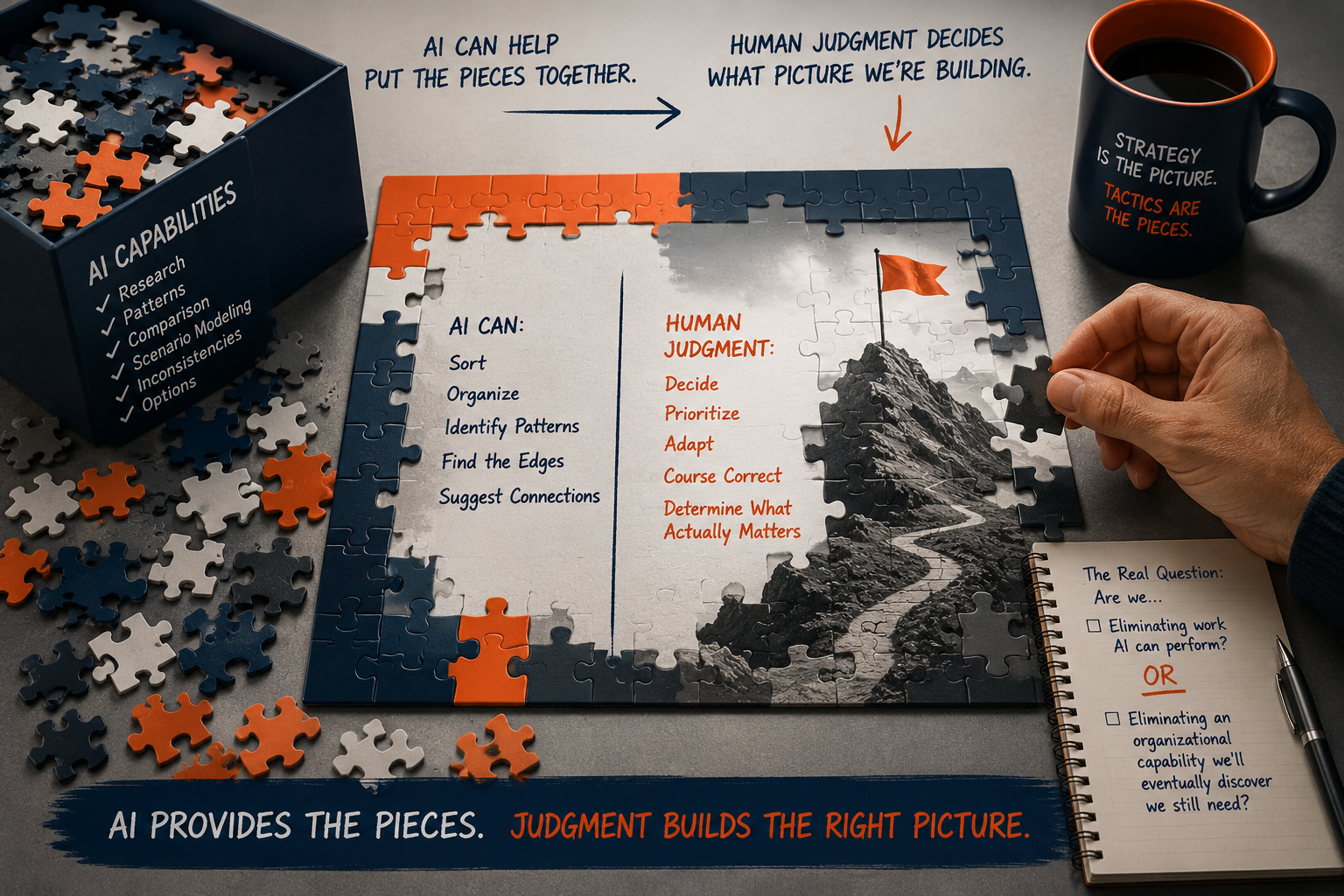
AI can often get something 80% of the way there remarkably fast. That's real productivity. The remaining 20% may require something different: recognizing that a technically sound recommendation won't work in this organization, that a presentation is answering the wrong question or that a logical argument won't persuade this particular audience.
That's where organizational knowledge, experience, discernment and judgment still matter.
For experienced leaders, that's part of the opportunity. AI doesn't require us to abandon the ways we've learned to think. It gives us a new place to apply them.
Learn the Technology. Learn the Translation.
Experienced leaders absolutely need to learn AI. We need to understand what it can do, experiment with it, recognize its limitations and risks, and determine where it changes our businesses, teams and roles. But we shouldn't assume every unfamiliar term represents a capability we don't possess.
When we encounter another new AI term, perhaps the better question is:
- Is this something new I need to learn, or is this new vocabulary for something I already know how to do?
- Sometimes the answer will be, I need to learn this. And other times you’ll realize: “Oh. That's what we're calling that now.” And that observation is useful too.
Because the goal isn't to SOUND fluent in AI. The goal is to become fluent in using it. Those aren't necessarily the same thing.
Although I am going to try to remember that it's called a document-style Writing Block. No promises, because honestly, “Word bubble” has kind of grown on me.