
The Most Expensive Words in a Meeting
These are the most expensive words in a meeting...
"I understand."
Or at least we think we do. Because sometimes everyone understands...until they don't.
So why do intelligent, experienced, capable people sit quietly in meetings when they don't understand something?
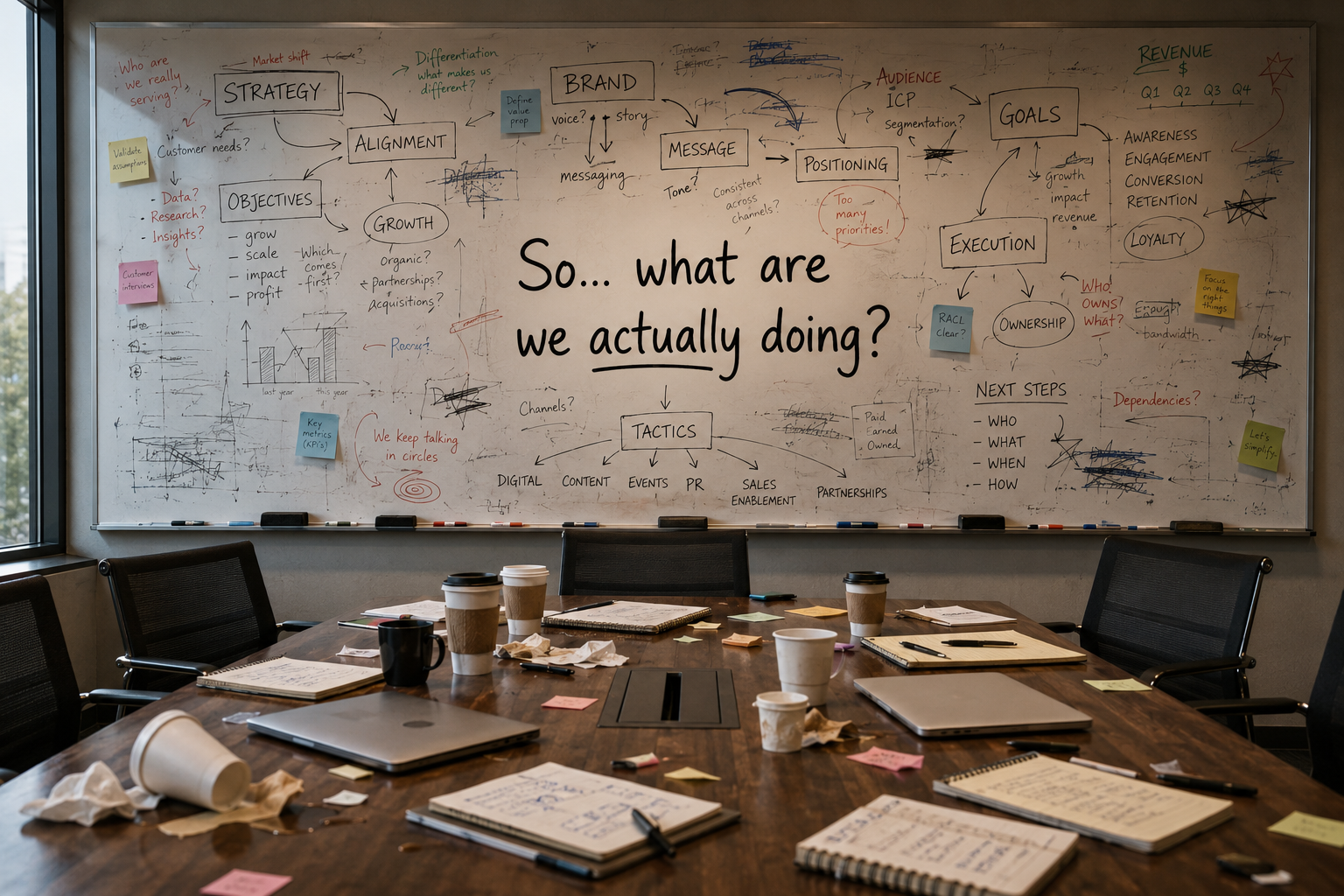
I don't think it's because they aren't curious. I think somewhere along the way we've confused knowing with competence. So people learn to perform understanding.
I know— I used to be one of those people.
Someone is presenting. An acronym gets thrown out that I don't recognize. Everyone else seems to know what it means.
So I nod and think:
- Maybe I missed something.
- I should probably know this.
- Everyone else seems to understand.
- I'll figure it out after the meeting.
The presentation continues. Everyone keeps nodding. The meeting ends. And everyone leaves with their dignity intact and possibly six completely different understandings of what the hell they just agreed to.
We've all been there.
The problem isn't that people don't care. It's that many of us have been conditioned to believe asking a question reveals a weakness. So instead of being curious, we become quiet. When I was younger, I wanted to prove I belonged in the room. Today, I care more about getting it right.
If someone says, "AEM," I might stop the conversation and ask, "I'm sorry...what does AEM stand for again?" Sometimes I laugh, "of course. Adobe Experience Manager. I knew that. I just wasn't connecting the acronym."
Other times, I discover it isn't an industry acronym at all. It's an internal project, process, or system everyone inside the company understands and no one outside does. Those moments have taught me that asking a thoughtful question doesn't slow progress.
It creates clarity.
Some of the most expensive organizational problems don't begin with bad strategy. They begin with assumptions no one challenged because everyone assumed someone else understood. I've never asked a question to slow a meeting down. I ask because I'm trying to create clarity.
- Are we talking about the same thing?
- Are we defining success the same way?
- What does this decision actually mean for the people responsible for executing it?
Because once the meeting ends, execution begins.
I'd rather spend five extra minutes creating clarity than spend five months fixing a misunderstanding.
The smartest executives I've worked with weren't the ones who always had the answers. They were the ones comfortable enough to ask one more question—not because they lacked competence, but because they cared more about getting it right than appearing to already know.
Maybe the most valuable words in a meeting aren't, "I understand."
Maybe they're: "Help me understand."