
What If the Greatest Value of AI in Marketing Isn't Efficiency?
More Time to Focus on What Really Drives Results.
There's a lot of conversation right now about how much work AI can do and how many people organizations may no longer need to do it. I completely understand the appeal. If technology allows a marketing team to produce more content, analyze information faster, develop campaigns in less time, and automate repetitive work, it's reasonable for executives to ask what that means for productivity and staffing.
But before we start reorganizing departments or reducing headcount, I think there's another question worth considering.
Are we trying to make Marketing less expensive, or are we trying to make our Marketing more valuable to the business?
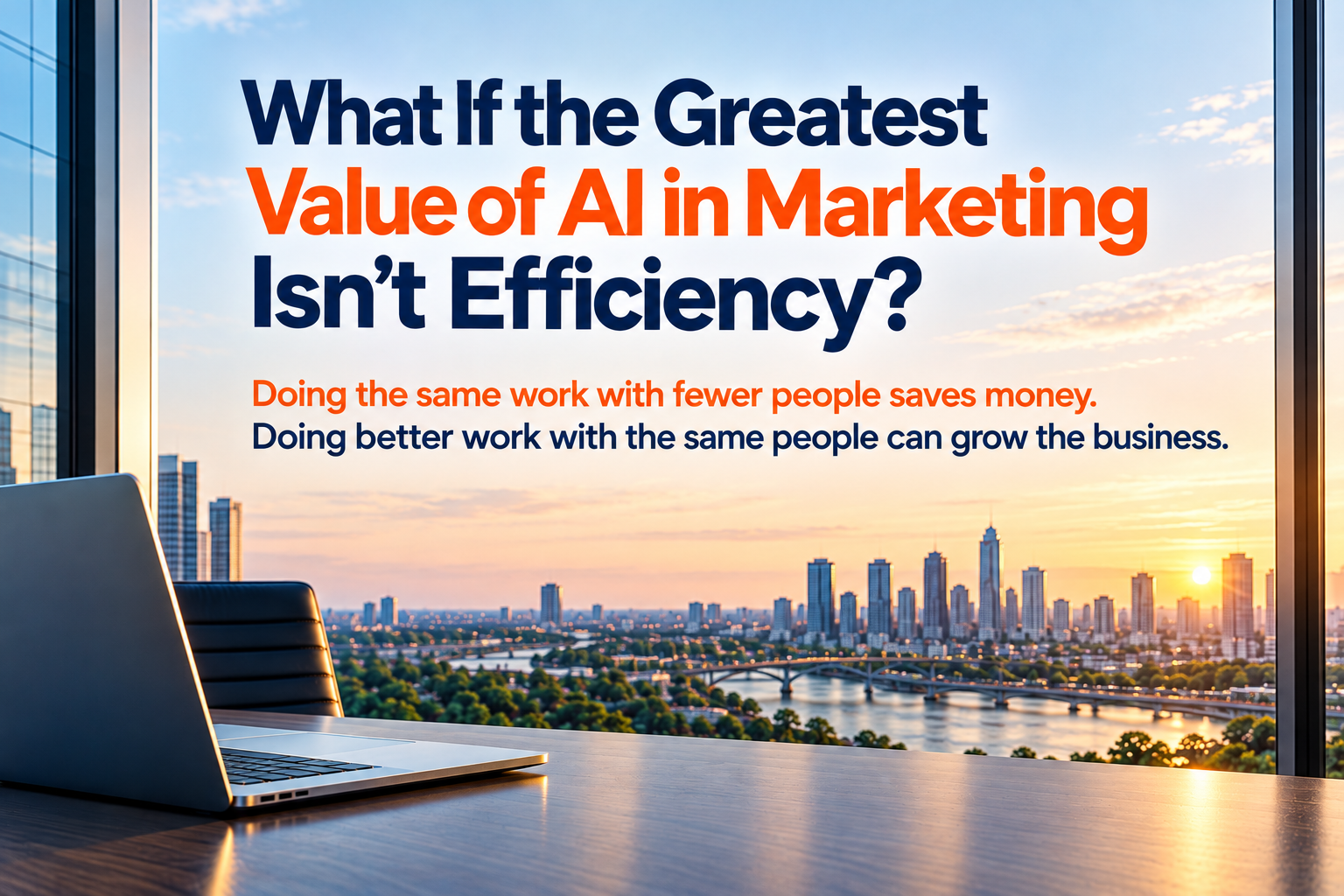
Those objectives aren't necessarily mutually exclusive. But they're not the same thing, either.
AI Can Do the Work. But Is It the Right Work?
In an earlier PaceSetter article, Can AI Replace an Entire Marketing Department?, I explored the difference between the work AI can perform and the marketing expertise organizations still need.
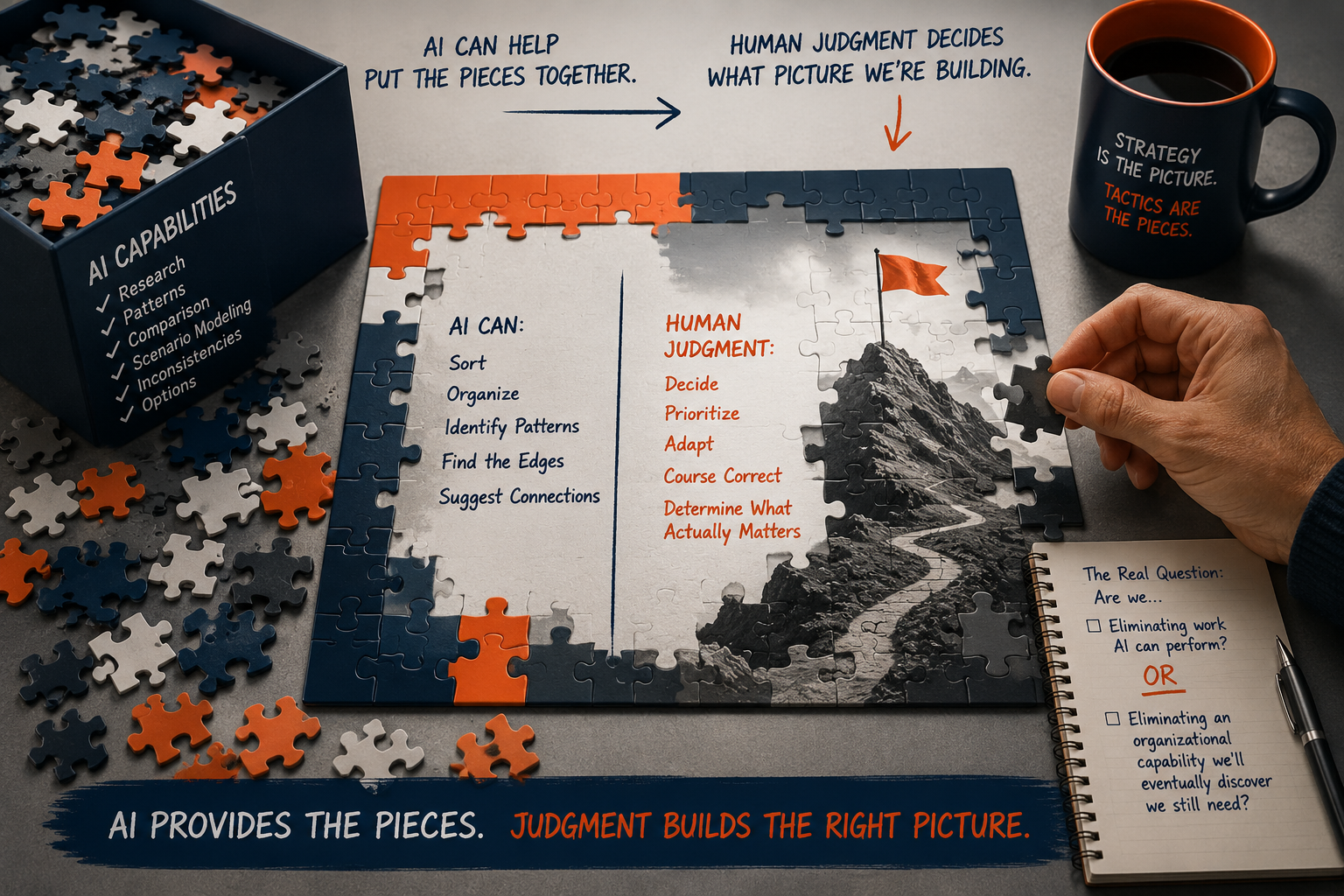
AI can accelerate research, analysis, content development, and execution. But producing a deliverable isn't the same as knowing whether it's the right deliverable.
We've all seen examples of AI-generated marketing graphics that somehow manage to squeeze an entire article onto one image, complete with unreadable text, questionable imagery, and perhaps a typo or three. And increasingly, we're seeing graphics that look remarkably similar, regardless of the company, audience, or message.
I use AI to create marketing graphics myself, but I approach it with the same expectations I would have when working with a graphic designer. There are brand guidelines to follow, an audience to consider, accessibility and readability requirements, and basic design principles like visual hierarchy and white space. The graphic needs to communicate something meaningful, not simply demonstrate that the technology can produce an image.
That's what concerns me about some of the AI-generated work we're seeing. It's not that AI created it. It's that someone apparently accepted the first result without questioning whether it was accurate, appropriate, on-brand, or even readable. The technology produced a graphic, but the expertise needed to direct and evaluate the work was missing.
That's the distinction between getting something done and getting something done well. It becomes particularly important when executives begin making decisions about the future of their marketing organizations.
If AI allows a team to accomplish significantly more, why are we automatically assuming the best outcome is accomplishing the same things with fewer people? What if the greater opportunity is to accomplish things the organization hasn't had the time, resources, or information to do well?
Efficiency & Effectiveness Are Two Different Things
Efficiency is about how we use resources. Can we complete the work faster, reduce unnecessary steps, lower costs, or increase output without adding proportional expense?
Effectiveness asks whether we're accomplishing the right things and producing meaningful results.
A marketing department can become dramatically more efficient without becoming any more effective. Imagine a team that uses AI to double its content production. Blog articles are published more frequently, social media calendars are full, campaigns launch faster, and reporting takes a fraction of the time it once did.
Those are measurable improvements in productivity. But what if:
- The content isn't reaching the right audience?
- The campaigns aren't addressing the reasons customers hesitate to buy?
- The organization is generating more leads that Sales doesn't consider qualified?
We've improved the speed of the operation without necessarily improving its contribution to the business.
AI may allow organizations to become exceptionally efficient at doing things that weren't particularly effective in the first place. And that's a pretty expensive mistake if the organization mistakes increased activity for improved performance.
What Could Marketing Do With More Capacity?
I've spent much of my career working with marketing teams that had more opportunities than time or resources to pursue them.
There was always more we wanted to understand about customers, more competitive information we could have examined, and more opportunities to improve how we communicated with different audiences. Some of that work received less attention because the team was occupied with the immediate demands of keeping the business moving.
That's where I see enormous potential for AI.
Experienced marketers can now research emerging markets more thoroughly, examine customer behavior across more touchpoints, identify patterns in feedback, and develop customer journeys that respond more quickly to changing needs. They can test different approaches before committing substantial budgets and provide Sales with more useful intelligence.
These aren't simply opportunities to produce more marketing materials. They're opportunities to make better business decisions and tackle work that previously fell by the wayside because there simply wasn't enough time or resources to do it.
So before deciding that AI means a department needs fewer people, I'd want to understand what additional value those people could create with the time and capabilities AI makes available. Doing the same work with fewer people may reduce costs. But using that same team to accomplish work it previously lacked the capacity to pursue could create opportunities for growth.
The Capabilities Marketing Needs Are Changing
None of this means that marketing departments should remain unchanged. AI is changing the work, and organizations need to evaluate whether their teams have the capabilities required to take advantage of it.
Some repetitive tasks will require considerably less human effort. Certain roles will evolve, and some organizations may legitimately need fewer people performing particular activities.
But there's another side to that equation.
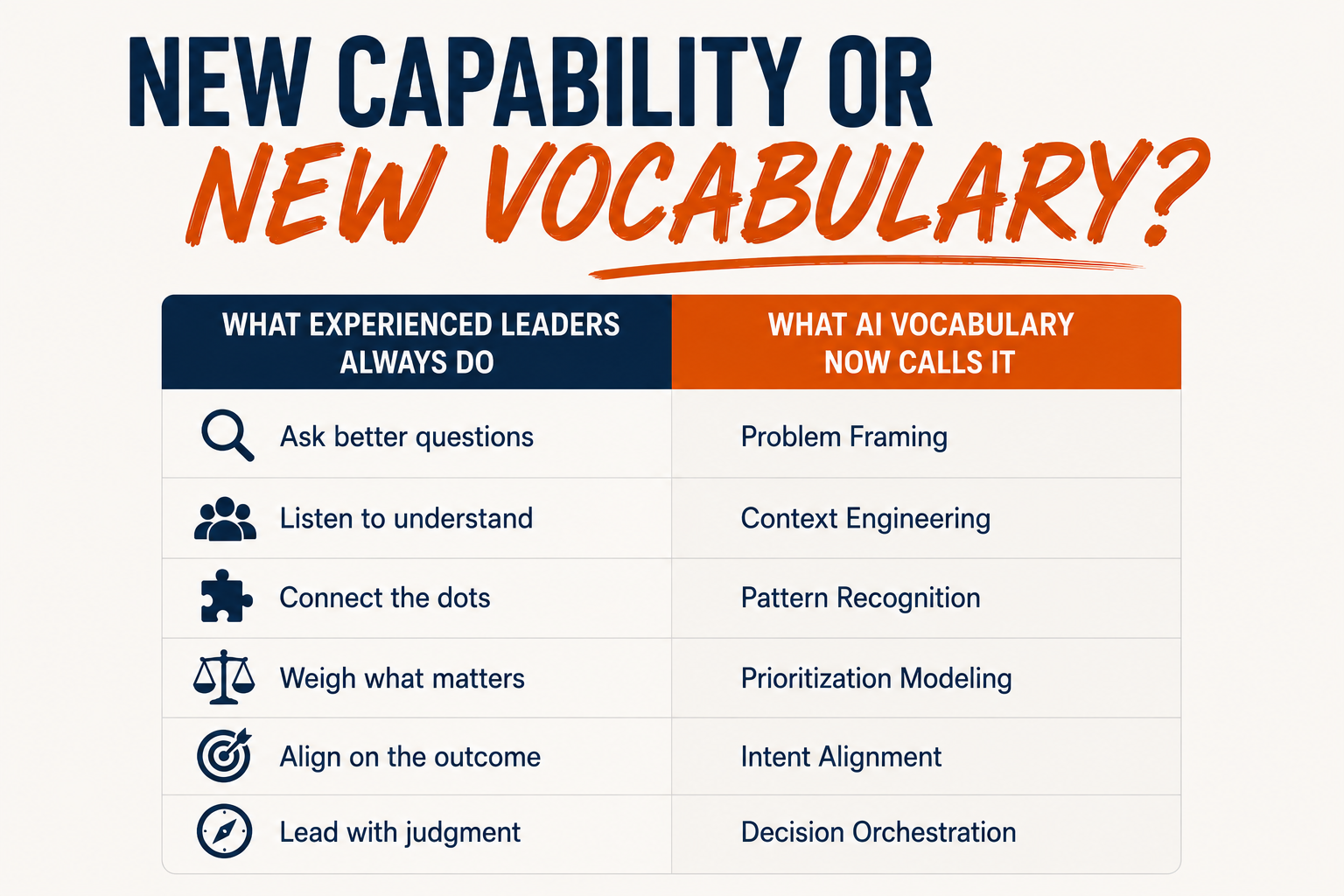
As AI takes on more production and information-gathering work, marketing teams have an opportunity to redirect their attention toward activities that require greater business understanding.
- Competitive research: Faster research is useful, but someone still needs to determine what the findings mean for the organization.
- Customer communications: More responsive communications are valuable when they're grounded in how customers actually behave.
- Campaign development: A campaign that can be produced in an afternoon still needs a reason to exist.
The technology changes how the work gets done, but it also creates an opportunity to reconsider where marketing professionals can contribute the most.
An organization may discover that it needs fewer resources devoted to production and more devoted to customer intelligence, marketing operations, strategic planning, or cross-functional coordination. It may need to retrain people, redefine responsibilities, change processes, or invest in capabilities it previously lacked.
The answer should follow the business strategy, not simply the availability of new technology.
Are We Measuring the Right Return on AI?
Executives have every reason to expect a return on their AI investments. But I wonder whether some organizations are measuring the easiest things rather than the most important ones.
Hours saved, content produced, and positions eliminated are relatively straightforward to quantify. Those efficiency measures matter, particularly when organizations are under pressure to manage costs. But they don't tell us whether marketing is contributing more value to the business.
I'd also want to know whether we're improving lead quality, customer acquisition, retention, adoption, conversion, or the effectiveness of our marketing investments. That includes identifying opportunities sooner, helping Sales have better conversations, improving the customer experience, and making decisions with better information.
Those outcomes can be harder to measure than calculating how many hours it takes to produce a campaign, but they're much closer to the reasons organizations invest in marketing in the first place.
There's also a longer-term consideration. If a company reduces its marketing team before understanding which capabilities create business value, it may eliminate expertise that's difficult to rebuild. The savings may appear immediately, but the consequences could take much longer to notice.
Start With What the Business Needs Marketing to Accomplish
Before redesigning a marketing department around AI, I'd encourage executives to consider a few questions:
- What are our business priorities, and what do we need Marketing to contribute to achieving them?
- Which activities are consuming resources without producing meaningful results?
- Where can AI improve productivity, and where could it help us accomplish something we couldn't do before?
- What marketing capabilities do we need to strengthen, develop, or retain?
- How will we measure whether these changes improve business performance?
The answers may lead to a smaller department, a differently structured department, or an investment in capabilities the organization didn't previously have. There isn't one correct organizational model for every business. But at least those decisions will be grounded in what the business is trying to achieve. The availability of a new technology isn't, by itself, a strategy for using it.
AI gives organizations an extraordinary opportunity to rethink how marketing works. But if we approach that opportunity primarily as a way to reduce the cost of producing what we've always produced, we may miss the more valuable opportunity.
AI creates capacity.
What matters is what organizations choose to do with that capacity.