
Does Your Website Really Need an SSL Certificate?
Yes. You absolutely do.
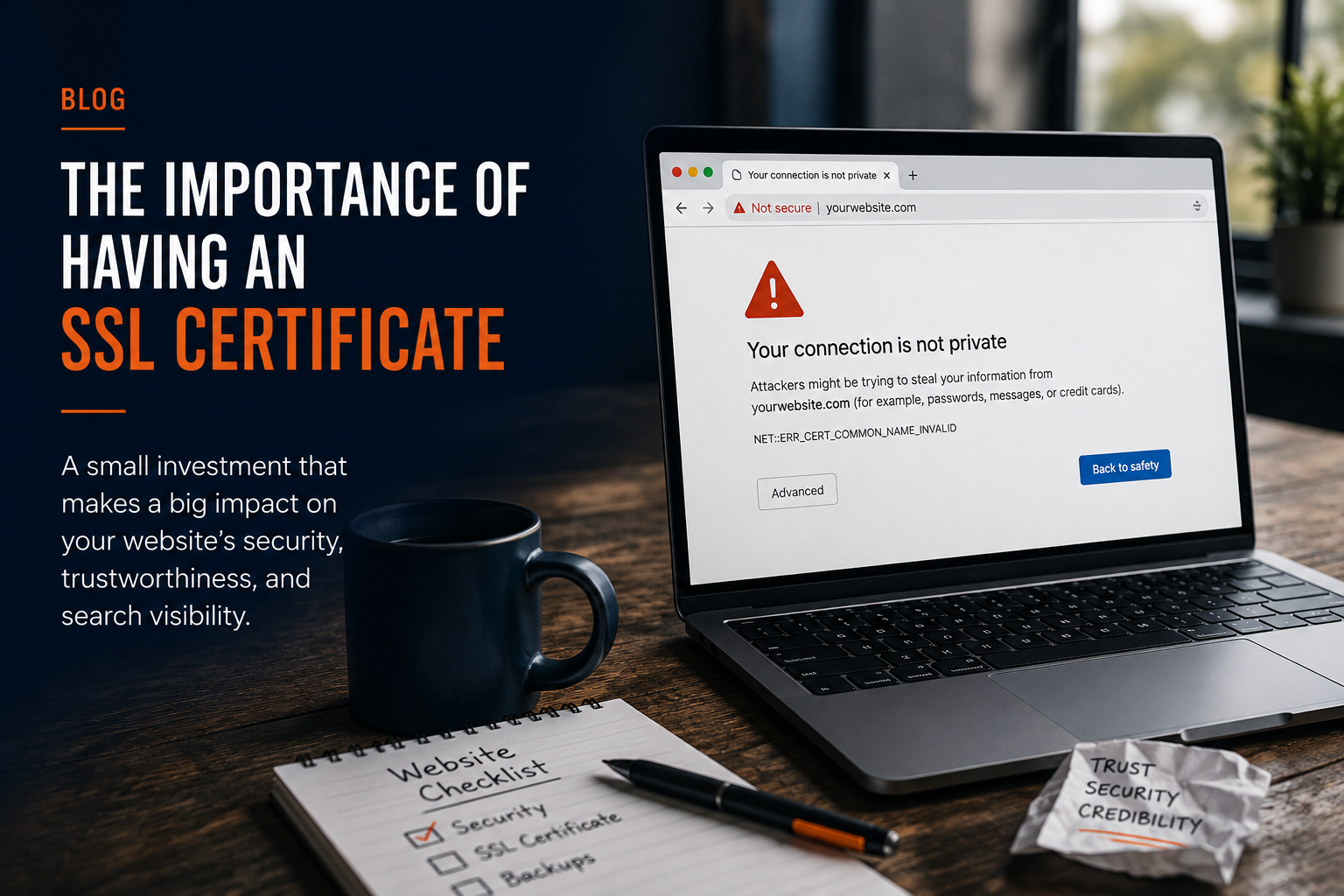
You visit a website and, before the page even loads, your browser tells you: “Your connection is not private.” What do you do?
If you’re like most people, you probably leave. That browser warning is one of the most visible reasons your website needs an SSL certificate. But SSL is about much more than avoiding an alarming message. It’s a fundamental part of protecting information exchanged through your website and maintaining the trust of the people who visit it.
What is an SSL certificate?
An SSL certificate helps create an encrypted connection between a visitor’s browser and your website, protecting information while it travels between the two.
Technically, today’s secure websites use TLS (Transport Layer Security), the successor to the older SSL technology. However, “SSL certificate” remains the term commonly used throughout the website industry.
When the secure connection is properly configured, your website uses HTTPS rather than HTTP.
That encrypted connection can help protect information submitted through your website, including contact forms, login credentials, payment information and other personal data.
Does every website need an SSL certificate?
Yes. A modern business website should have a valid SSL certificate, even if it doesn’t sell products or accept payments online.
Any website can exchange information with its visitors. A simple contact form, newsletter signup or customer login may involve personal information that should be transmitted securely.
There is also a more practical business reason: visitors expect websites to be secure.
If a browser warns someone that your website isn’t secure, many visitors aren’t going to investigate why. They’re simply going to leave.
What happens if a website doesn’t have an SSL certificate?
Without a properly configured SSL certificate, visitors may receive security warnings, information transmitted through the website may not be adequately protected, and the website can lose credibility with potential customers.
Modern browsers make website security increasingly visible to users. When someone encounters a warning such as “Your connection is not private,” the technical explanation behind it probably doesn’t matter very much. The message they receive is simpler:This website may not be safe.
That’s a significant trust problem for any business.
How does an SSL certificate protect customer information?
SSL/TLS encrypts information while it travels between a visitor’s browser and the website’s server, making that information much more difficult for an unauthorized party to intercept or alter.
This is especially important when visitors submit information such as:
- Names and email addresses
- Contact form information
- Usernames and passwords
- Account information
- Payment or financial information
- Other personal data
Encryption also helps protect the integrity of information while it is being transmitted.
Does an SSL certificate help SEO?
Yes, HTTPS is a Google ranking signal, but having an SSL certificate alone will not significantly improve a website’s search rankings.
Google has used HTTPS as a ranking signal for years, so website security remains part of a sound technical SEO foundation. But SSL shouldn’t be viewed as an SEO shortcut. Search visibility depends on many factors, including useful and relevant content, website performance, usability, authority and overall technical health. HTTPS is simply something Google—and your visitors—expects from a modern website.
Do ecommerce websites need SSL certificates?
Yes. Websites that accept payments need secure encryption to help protect payment information transmitted between customers and the website.
Businesses that store, process or transmit payment card information may also be subject to the Payment Card Industry Data Security Standard (PCI DSS).
An SSL certificate alone does not make a website PCI compliant. PCI compliance involves broader security requirements. But securely transmitting payment information is an essential part of protecting customer data.
Does an SSL certificate make a website GDPR compliant?
No. An SSL certificate can help protect personal information during transmission, but SSL alone does not make a website GDPR compliant.
Privacy compliance involves much more than HTTPS. Businesses may need to consider how personal information is collected, processed, stored, shared and retained, along with other privacy and security requirements. Encryption is one piece of a much larger data-protection strategy.
Does HTTPS mean a website is completely secure?
No. HTTPS protects information traveling between a visitor and a website, but it does not protect the website from every cybersecurity threat.
SSL/TLS does not replace:
- Secure website hosting
- Software and plugin updates
- Strong passwords and access controls
- Website backups
- Malware protection
- Responsible management of customer data
- Even malicious websites can obtain SSL certificates and use HTTPS.
The presence of HTTPS tells you the connection is encrypted. It does not guarantee that the organization behind the website is trustworthy.
How can you tell if your website has an SSL certificate?
The easiest way is to visit your website and confirm that its address begins with https:// and that your browser does not display a security or connection warning.
Website owners should also make sure their SSL certificates remain valid and renew properly. Many modern hosting platforms manage SSL certificates and renewals automatically, but it’s still worth confirming that everything is working correctly.
Test more than your homepage. Older pages, subdomains or incorrectly configured links can sometimes create security issues even when the primary website appears secure.
The Bottom Line
Yes, your business website needs an SSL certificate.
It protects information transmitted through your website, supports visitor trust, provides part of the technical foundation search engines expect and is particularly important when your website collects personal or payment information. Your customers may never know what SSL, TLS or HTTPS actually means. They don’t need to. They simply expect your website to work—and they expect the information they give you to be protected.
If the first thing their browser tells them is “Your connection is not private,” you’ve created a trust problem before you’ve had an opportunity to say a single word.